Summer in the Mountain Heights of Friuli Vene...
21.07.2026Summer unfolds across the mountains of Friuli Venezia Giulia with mountain lifts operating for the summer season and a wide...
Summer in the Alps is still underestimated. Many people arrive for winter and leave before the mountains are at their most usable, when the lifts reopen, the trails clear, and the terrain becomes easier to move through than at any other time of year.
It comes down to access and in summer, the best resorts get you into the mountains quickly. You start higher, go further, and spend your time walking instead of figuring out how to get there. Once you get used to that, it is hard to choose anywhere else.
Not every resort gets this right and some remain set up for winter and never fully adapt to the way a resort needs to operate over the summer months. Others understand exactly what summer requires, keeping lifts running, maintaining dense trail networks, and making it straightforward to link routes across entire valleys.
Across France, Switzerland, Italy and Austria, a small group of resorts stand out for doing this well. These are the places where you arrive, step onto a lift, and within a short time find yourself properly in the mountains, with the freedom to decide how far you want to go.
Here are nine of our favourite mountain resorts across Europe for summer, places where you can explore the summer season and enjoy the mountains in a different way.
© Segolene Ruggiero
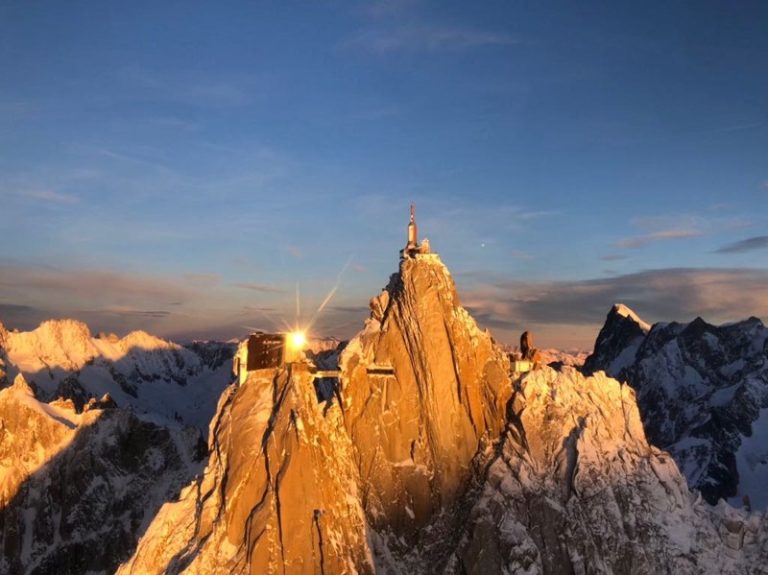
You arrive in Chamonix with Mont Blanc already in view and the scale of the valley hits you immediately, and this is the reason it remains among Europe’s top summer resorts as well as a flagship winter destination. The Aiguille du Midi cable car reaches 3,842 metres in under 20 minutes, so you begin your day at altitude rather than climbing toward it. That single factor changes what you can do, especially if you’re planning a short Alps break.
When the summer lifts open, Brévent and Flégère connect to the Grand Balcon Nord and Sud, two of the Alps’ most effective hiking routes, allowing you to stay high while moving laterally across the valley, covering ground without repeated ascents. Chamonix also provides a great structure, as the Tour du Mont Blanc passes directly through the valley, letting you join sections of this classic long-distance route as day walks without committing to the full circuit.
The Mont Blanc Express train links the valley from end to end, so you can move between trailheads and villages such as Les Praz without a car, which simplifies planning over several days. We believe this is one of the strongest all-round summer bases in the Alps, combining altitude, access and infrastructure in a way few other resorts can.
Where to stay: Hôtel Mont-Blanc puts you in the center, close to lifts and transport, reducing time lost at the start and end of each day.
What to do: Take the first lift to Aiguille du Midi, then descend to the Grand Balcon Nord via Plan de l’Aiguille, starting early for clearer conditions and fewer people on the trail.
© Zermatt Tourist Office
Zermatt is among the Alps’ best summer resorts if you crave being organised and being able to move around the resort easily, because the whole resort is designed to take the hassle out of life, the moment you arrive. Cars stop at Täsch and you continue by train and inside the village electric vehicles replace traffic, creating a quieter, more subdued environment that becomes more noticeable over a few days.
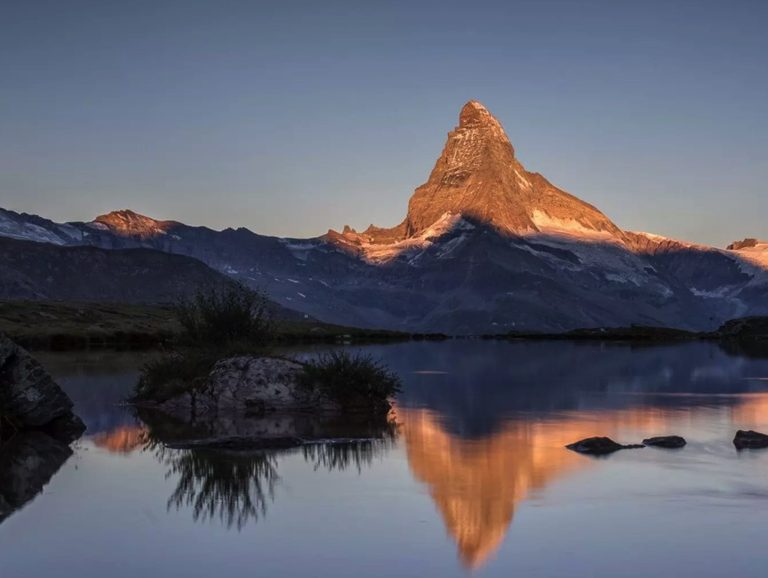
The lift system reaches 3,883 metres at the Matterhorn Glacier Paradise, the highest lift-served point in Europe, letting you stand on glacier terrain even in midsummer, a rarity among European mountain resorts. The walking network covers over 400 kilometres of marked trails, with the Five Lakes Walk standing out as the most reliable route for views of the Matterhorn, especially if you start early when the lakes are still and reflections pristine. You move quickly between altitude levels, starting high, descending through pastures, and finishing lower in the valley without retracing your steps, making planning simple and flexible.
Where to stay: Hotel Firefly offers a quieter base with easy access to lifts and space to recover after long days outside.
What to do: Walk the Five Lakes route from Blauherd to Sunnegga, stopping at Stellisee early for the clearest Matterhorn view.
© 360DSM
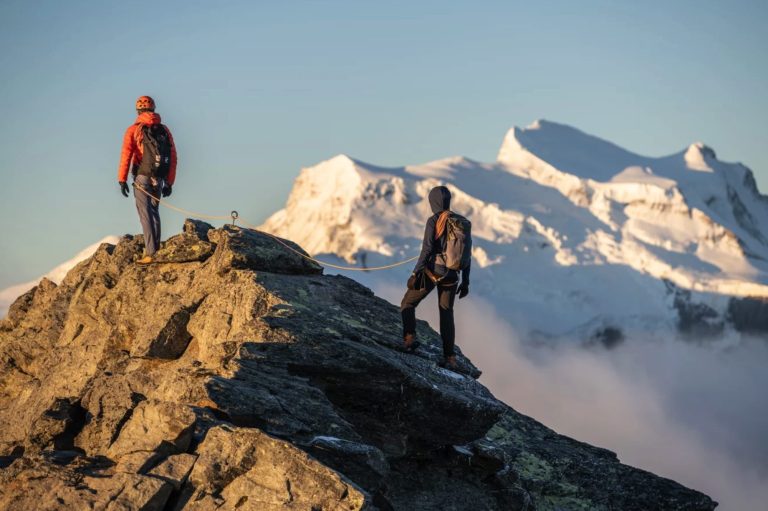
Verbier gives you range, the reason it remains among Europe’s best summer mountain resorts: the 4 Vallées lift network opens a vast area that stays open and accessible through the season. Lifts reach Mont Fort at 3,330 metres, serving as a launch point for longer routes across ridgelines and into neighbouring valleys, rather than the actual villages.
The resort maintains over 500 kilometres of hiking trails, allowing day-to-day variety without transport, and more than 800 kilometres of mountain biking routes make it a top Alps pick for lift-assisted riding. The village stays active through summer, with restaurants open and events like the Verbier Festival providing structure to the season. Verbier works because it offers variety without complication, so you can change plans day to day based on conditions.
Where to stay: W Verbier sits at the base of the main lifts, minimising early-day movement.
What to do: Take the lift to Mont Fort and follow the ridge toward Col des Gentianes, where the terrain opens up with incredible views.
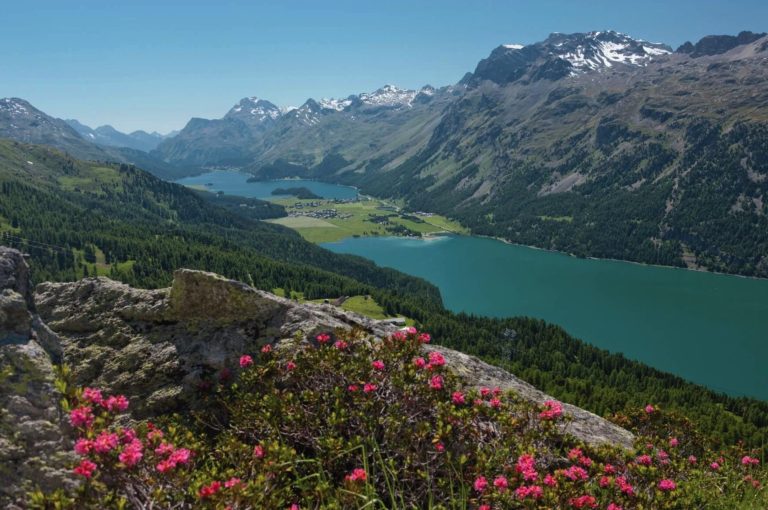
St Moritz offers a different type of summer mountain holiday, as the Engadin valley is wide and open, inviting longer routes with less emphasis on steep climbs. The region features over 580 kilometres of walking trails, many following the valley floor or rising gradually, making it one of the Alps’ best areas for covering distance rather than gaining height.
Lakes define this resort, with Lake St Moritz and Lake Silvaplana supporting swimming and sailing, and summer water temperatures reaching roughly 17–20 degrees, higher than most alpine lakes. Wind moves steadily across the valley, especially as the day progresses around the lakes. St Moritz suits you if you prefer space and movement over steep terrain, remaining one of the Alps’ most usable summer resorts for longer stays.
Where to stay: Badrutt’s Palace offers central access and close proximity to the lake and rail links.
What to do: Walk from St Moritz to Silvaplana along the valley route, then swim in the afternoon when the water warms.
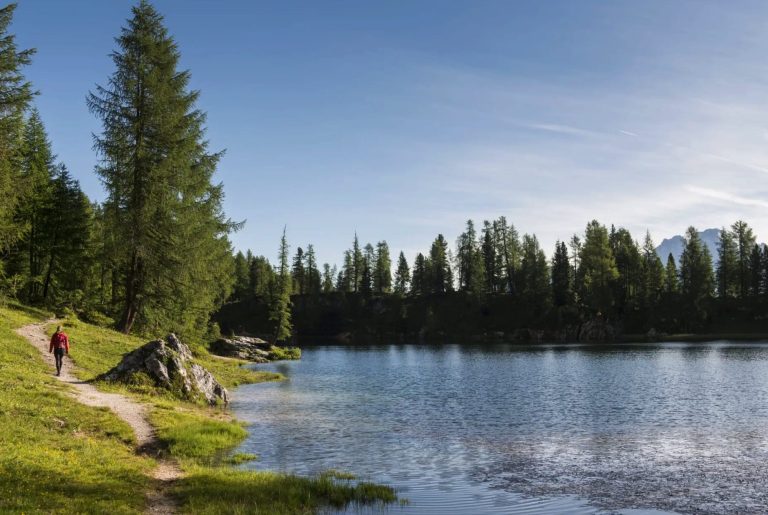
© Cortina d’Ampezzo
Cortina stands apart from many top summer resorts in Europe because the terrain is structured differently: limestone peaks rise sharply from flatter ground, creating clear, defined routes rather than broad, open access. The lift system connects to Cinque Torri and Lagazuoi, practical starting points for high-level walking, and these areas also contain preserved First World War tunnels and paths you move through as part of the route rather than as a separate attraction.
Via ferrata routes are central to the summer experience here, with fixed cables and ladders enabling access to steeper terrain without full climbing gear, and Cortina offers graded routes so you can choose a level that suits your experience. Rifugios line the main trails, shaping how you approach a day in the mountains by providing fixed stopping points rather than carrying everything. Cortina suits you if you prefer routes with a clear direction, where the terrain gives you a natural way to plan each day without overthinking it
Where to stay: Hotel de Len provides a central base with easy access to lifts and the main walking areas without adding unnecessary scale.
What to do: Take the Lagazuoi cable car and walk down through the First World War tunnels route, blending direct access to high terrain with a clear sense of history.
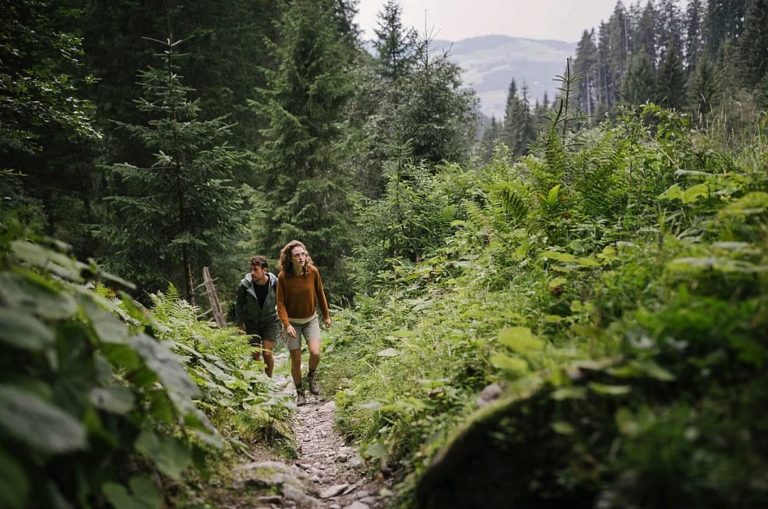
© Kitzbühel
Kitzbühel offers a different vibe from the higher Alpine resorts, which is precisely why it works so well as a summer base: softer, more consistent terrain of rolling hills, forests and pastures rather than sheer rock. The region preserves over 1,000 kilometres of marked trails, many suited to long-distance walking or trail running, letting you move steadily through the landscape rather than climbing in stages.
The Hahnenkamm lift runs in summer and opens ridge routes that provide wide Tyrolean views without technical demands or heavy ascents. Cycling is integrated here, with over 800 kilometres of routes including a strong e-bike network, making long distances more approachable. Kitzbühel emphasizes usability over dramatic peaks, and that consistency strengthens over several days.
Where to stay: Tennerhof offers a quieter setting just outside the center, with direct access to walking routes.
What to do: Take the Hahnenkamm lift and follow the ridge toward Pengelstein, where terrain opens and the route stays steady.
Wengen and Mürren sit high above the Lauterbrunnen valley, and the landscape’s vertical scale defines the experience from arrival onward. Access is by rail or cable car, and with no cars in either village, the atmosphere stays quiet and noticeably calmer after a day or two.
From Wengen, the Jungfraujoch railway reaches 3,454 metres, providing direct access to glacier terrain, while from Mürren, the Schilthorn cable car offers one of the Bernese Oberland’s most reliable viewpoints. Below, the Lauterbrunnen valley holds 72 waterfalls, with Staubbach Falls most visible, dropping into the valley and remaining in view from multiple trail points. The walking network connects both sides of the valley, letting you move between villages, descend to the valley floor, and return by train without retracing your steps. This is one of the Alps’ strongest areas for visual impact, with a constant scale that holds through the day.
Where to stay: Hotel Mürren Palace offers direct lift access and uninterrupted valley views.
What to do: Walk from Mürren to Grütschalp along the balcony path, maintaining height and offering continuous valley and waterfall views.
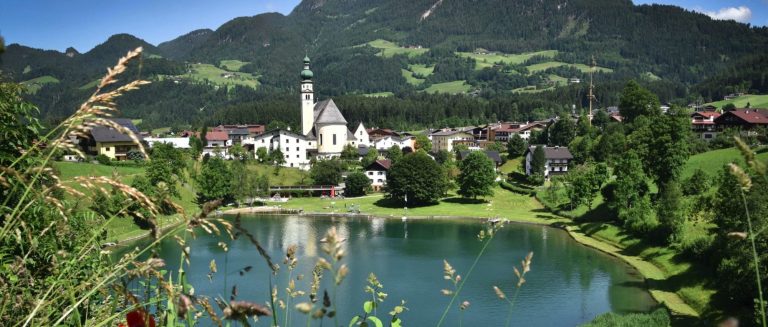
© Alpbachtal Tourisms
Alpbach is smaller and more contained than most top summer resorts, a feature that adds to its appeal by removing scale and intensity found elsewhere. Building regulations keep a cohesive village style, creating a clear identity and avoiding overdevelopment.
The Alpbachtal region features over 900 kilometres of walking trails, with routes through pastures and forests and mountain huts placed at regular intervals, making planning easier. Reither See provides a reliable swimming option, with water temperatures higher than most alpine lakes, ideal for longer water time.
Visitor numbers stay lower than at larger resorts, a noticeable relief on the main routes even in peak summer. Alpbach works best if you want quiet, structured walking without the scale of bigger destinations.
Where to stay: Der Böglerhof sits centrally and allows direct access to local trails.
What to do: Walk from Alpbach to Wiedersberger Horn, a clear, direct route with open valley views.
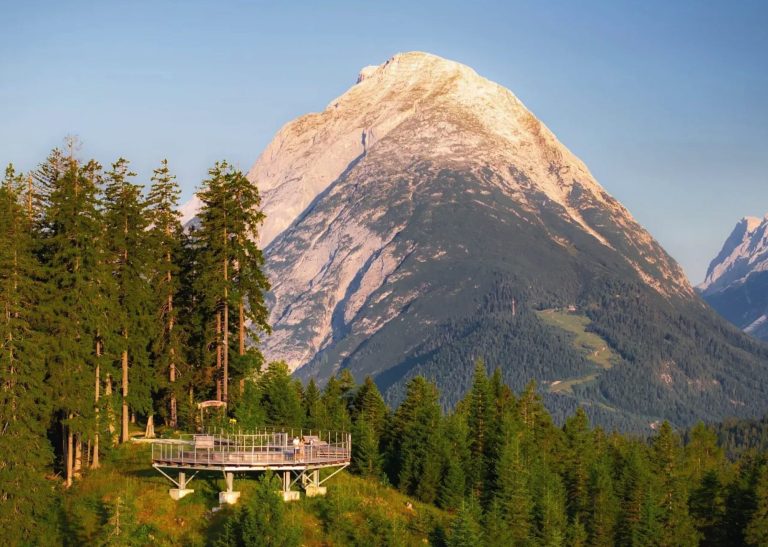
© Seefeld
Seefeld sits on a plateau above Innsbruck, and the terrain mirrors this vantage, open and accessible, with fewer steep sections than higher alpine resorts. The region offers over 650 kilometres of walking trails, many flat or gently rising, enabling longer distances with less effort.
Wildsee lake sits near the heart of the resort and supports summer swimming, with water temperatures around 20 degrees in warmer periods, making it one of the Alps’ more accessible lakes. Access is straightforward. The train from Innsbruck takes about 30 minutes, with regular services, making Seefeld one of Europe’s easiest mountain resorts to reach. Seefeld works because it removes complexity. You arrive, start moving, and maintain a steady pace without managing tricky terrain.
Where to stay: Astoria Resort provides a quieter base just outside the center with direct access to walking routes.
What to do: Walk the Wildsee circuit in the morning, then return in the afternoon for a warm-water swim.
Enjoyed this article? click here to get more from us
Summer unfolds across the mountains of Friuli Venezia Giulia with mountain lifts operating for the summer season and a wide...
The all new edition of Peak Performance’s Helium AOP Down Hood jacket is a genuinely impressive update to a long‑running...
There is something reassuring about arriving at one of the world’s cleanest beaches and seeing a Blue Flag fluttering in...
Cairngorm Mountain has launched into the summer holidays with extended opening hours, extra activity sessions and family savings across some...